Most scenes people call conflict are actually just obstacles.
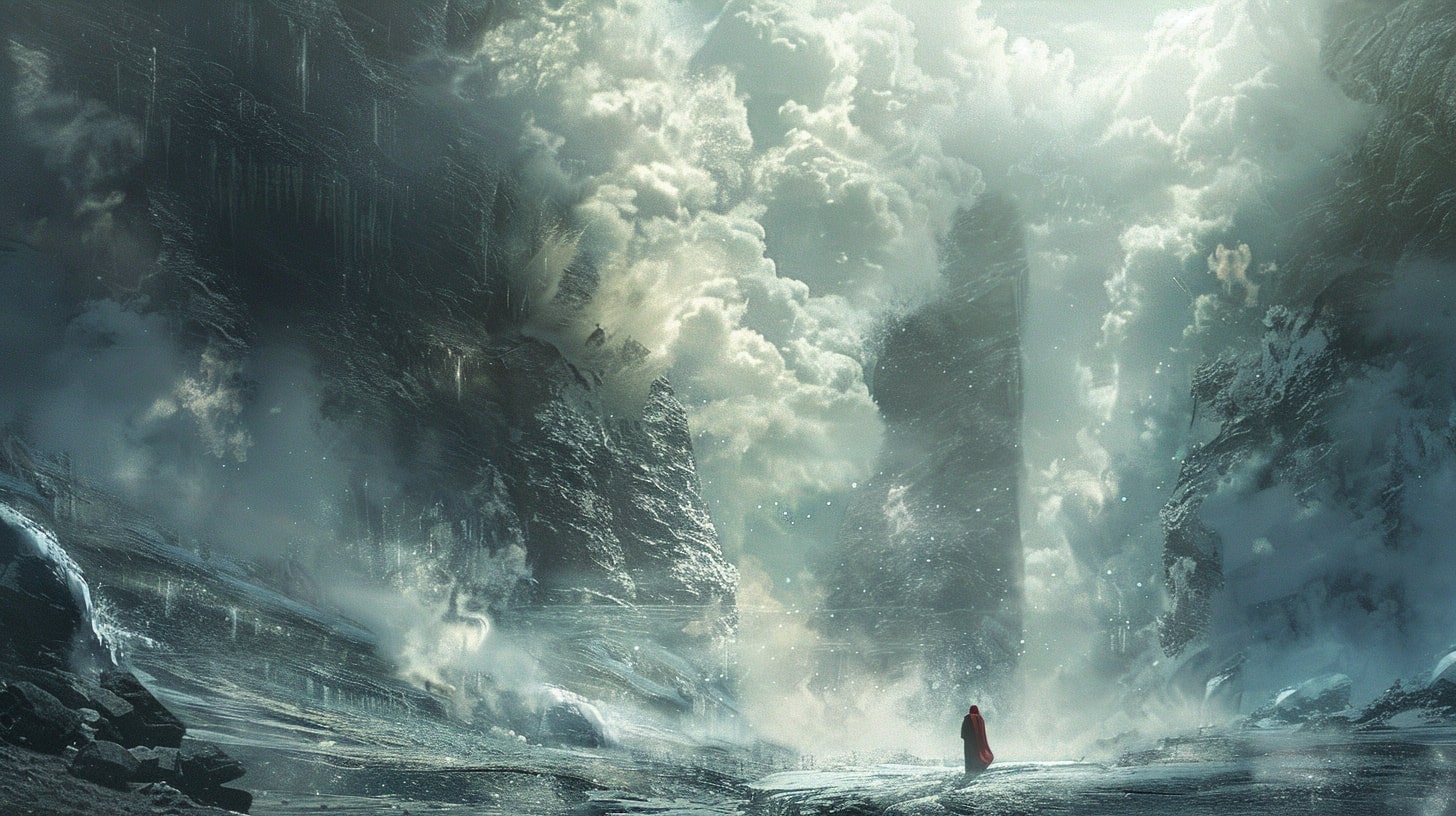
A locked door is an obstacle. A guard is an obstacle. A blizzard is an obstacle.
Your character finds the key, bribes the guard, waits out the storm, and the story moves one square forward with nothing lost.
Conflict is when two things the story values cannot both survive the scene.
She keeps her sister's secret or she keeps her job. He tells the truth about the accident or he stays the man his daughter thinks he is, and something has to die on the page.
That is the test I would apply to every scene in a draft. If the character can get what they want without giving anything up, you have written a delay.
An obstacle blocks the goal, a conflict prices it
The difference sounds academic until you start cutting scenes.
Obstacles are solved by competence. The character is clever enough, strong enough, or lucky enough, and the reader watches skill get applied.
That can be fun, but it is not tension, because nothing about the character is at risk.
Conflict is solved by choosing, and choosing means losing.
Take No Country for Old Men. Llewelyn Moss finds the money and gets away clean. Then he goes back in the middle of the night to bring water to a dying man he left in the desert.
Nobody forces him. That single decision, mercy against self-preservation, is what puts Chigurh on him for the rest of the book.
The money was the obstacle. The water was the conflict.
Notice what Cormac McCarthy had to build first. Moss has to be the kind of man who would go back, and the going back has to cost him everything, and both of those are set up before the scene arrives. Conflict runs on what a character has already been established to care about, which is why it collapses when character goals and objectives are vague.
If you cannot name what your protagonist wants in one sentence, nothing can be taken from them.
The four types are not a checklist, they are four different pressures
Every writing site gives you the man vs. man list and stops there. The list is fine.
The problem is that it sorts conflict by opponent, which tells you almost nothing about how to build the scene.
What matters is what each type pressures and what a real resolution has to pay.
| Conflict type | What it pressures | What an earned resolution costs |
|---|---|---|
| Internal | The character's self-image | Admitting the version of themselves they defended was false |
| Interpersonal | A relationship the character needs | The relationship changes shape or ends, and cannot go back |
| Societal | The character's place in a group | Exile, loss of standing, or complicity in a system they now see |
| Environmental | The character's assumptions about control | Someone or something is lost, and no amount of skill would have saved it |
Read that last column again, because it is the part most drafts skip. Every one of those resolutions is a subtraction.
Internal conflict is a character arguing against their own evidence
Internal conflict is not indecision. A character who cannot pick a restaurant is not in conflict, they are in a scene with no stakes.
Real internal conflict happens when a character holds a belief about themselves that the plot keeps disproving, and they keep choosing the belief anyway.
In The Remains of the Day, Stevens has organised an entire life around the idea that dignity means total professional restraint. The novel gives him chance after chance to break it, and he refuses every one, including the night his father dies upstairs while he keeps serving.
The conflict is not "should I go upstairs." It is that going upstairs would mean the last thirty years were a mistake.
Structurally, internal conflict demands two things. The belief has to be visible in behavior rather than stated in interior monologue, and there has to be an external pressure that keeps testing it. Otherwise you get a character thinking in circles for four chapters.
This is the machinery underneath a character arc in storytelling, because the arc is just the record of when the belief finally broke or finally held.
Interiority for its own sake is not useless. Some of the best passages in fiction are a person alone with their own head. It becomes conflict only when the reader can see what it will cost to stay that way.
Interpersonal conflict needs both people to be right
The fastest way to kill a two-hander scene is to make one side correct.
If your protagonist is right and the other character is being unreasonable, there is no conflict. There is only a person waiting for the other person to catch up, and readers feel this instantly and check out even if they cannot say why.
Give both parties a defensible position and the scene starts generating on its own.
In Little Women, Amy burns Jo's manuscript. Amy is a child who was humiliated and excluded, and Jo has lost work she cannot reconstruct.
Neither of them is wrong about their own injury, and the scene has nowhere clean to land.
That is also why the best antagonists carry an argument rather than a threat, and why developing a compelling antagonist tends to fix conflict problems the protagonist chapters could not. If the opposition wants something coherent, every scene between them has two rights colliding instead of a right and a wrong.
Interpersonal conflict also has a structural requirement that most drafts ignore. The two characters have to need each other.
Rivals who can simply walk away have a disagreement, not a conflict, and the connective tissue in character relationships and dynamics is what makes leaving expensive.
Societal conflict is about who gets to define normal
Character versus society goes wrong when the society is a cardboard villain. An evil regime with no supporters is not a society, it is a boss fight with flags.
Real societal conflict works because most people inside the system believe in it, benefit from it, or have decided the cost of objecting is too high. The protagonist is not fighting a government. They are fighting the ordinary people around them who have already made their peace.
The Handmaid's Tale does this by making Serena Joy a woman who campaigned for the world that now imprisons her. In Never Let Me Go, the horror is that the students accept the system, and the adults who feel guilty about it built a small art gallery instead of stopping it.
The structural demand is that the system has to give the protagonist something. Safety, belonging, identity, income.
If it only takes, walking away is free and there is no conflict.
The scene where a character has to weigh their conscience against the thing the system provides is where societal conflict actually lives.
Environmental conflict is only interesting when it makes people choose
A storm is weather. A storm becomes conflict when there is not enough rope for everyone.
Nature has no motive, which means it cannot generate conflict on its own. What it does brilliantly is strip away options until the characters have to reveal their hierarchy of care.
In The Road, the wasteland does not oppose the man. It removes every alternative until keeping the boy alive and keeping the boy human become incompatible goals.
That is the move. Use the environment to delete the middle options, then let the characters choose from what is left.
The failure mode is survival competence porn, where the character knows how to build a fire, purify water, and set a splint, and the reader learns some interesting facts while the story stalls.
Skill resolves obstacles. Only choice resolves conflict.
Resolution is not the conflict ending, it is the bill arriving
Here is where most articles wave a hand and say "make it satisfying."
A resolution is the moment the reader learns what the choice cost. Not what the character achieved, what they paid.
Think about what actually sticks after a book ends. Not the plot mechanics, the price.
Frodo destroys the Ring and cannot live in the Shire afterwards. Rick puts Ilsa on the plane. Sydney Carton takes another man's place at the guillotine.
In every case the conflict resolves by one valued thing being surrendered so the other can live, and the story then holds still long enough for the reader to feel the absence.
If your ending has the character getting the goal, keeping the relationship, and holding onto their principles, you did not resolve a conflict. You resolved an obstacle and gave everyone a prize.
Resolving a conflict versus dissolving it
There are two ways to end a conflict and only one of them counts.
You resolve a conflict when the character chooses between the incompatible things and lives with the result. You dissolve a conflict when the story removes the incompatibility so no choice is needed.
Dissolution is everywhere in weak endings. The tyrant father dies of natural causes before the confrontation, or the love interest turns out not to be the sister's ex after all.
The war ends off-page. The character wanted to leave the small town and then the small town gets nice.
Every one of those is the author reaching in and taking the knife off the table. Readers do not always notice consciously. They notice as a flat feeling, a sense that the last thirty pages did not need to happen.
Test any ending with one question. What did the character give up that they still want? If the honest answer is nothing, the conflict dissolved.
Deus ex machina is a promise problem, not a plausibility problem
The eagles in The Lord of the Rings get accused of this constantly, and the accusation is wrong, which is useful because it shows what the real fault is.
A rescue is not deus ex machina because it is convenient. It is deus ex machina when it arrives from outside the story's established economy and takes the choice away from the character.
The eagles come after Frodo has already destroyed the Ring at the cost he was always going to pay. The choice happened, and the eagles are transport.
Compare that to an ending where a previously unmentioned inheritance clears the debt, or a character develops a new ability at the exact moment it is needed.
The reader has been watching a specific set of forces for three hundred pages. Introducing a new one at the end tells them the forces they were tracking did not matter.
Two rules keep you clean. Anything that saves the character has to be established well before it saves them, and the character has to be the one who applies it. Chekhov's gun is a fairness contract rather than a tidiness rule.
There is a version of this that is subtler and more common than the eagle problem. The character's flaw simply stops operating in the final act.
The coward becomes brave with no scene where cowardice was paid for. The addict is fine now. Whatever made them hard to be around has quietly been switched off so the ending can happen.
That is deus ex machina too, applied to personality instead of plot, and it is why character traits and flaws have to be load-bearing rather than decorative. A flaw that never costs the character anything was set dressing all along.
Unearned resolution has three tells
Most endings that feel wrong fail in one of three identifiable ways, and all three are fixable in revision.
The first is speed. The conflict took eighty thousand words to build and four pages to resolve.
Word count is not the real issue, pacing is. If the reader has not had time to believe the choice was hard, the ending reads as a formality.
The second is that someone else pays. The protagonist's dilemma gets settled by a secondary character's sacrifice, a mentor's death, or a confession from someone offstage.
The character is now the beneficiary of a resolution rather than the author of one.
The third is silence afterwards. The choice is made and the book ends immediately.
Resolution needs a scene where the reader watches the character exist in the aftermath, because the cost is not real until we see it being lived with. This is one of the few places where slowing down is the correct instinct.
Ambiguity works, and not every conflict has to close.
But an open ending and an unpaid ending are different objects. An open ending shows the price and withholds the outcome, and an unpaid ending shows the outcome and hides the price.
Escalation is removing options, not raising volume
The standard advice is to raise the stakes, which usually gets interpreted as making the threat bigger.
More people in danger. A bigger army. The fate of the world.
Bigger threats have diminishing returns fast. Once the world is at stake there is nowhere to go, and readers stop registering the numbers.
The escalation that works is narrowing. Take away the character's allies, then their information, then their fallback plan, then the option they were quietly counting on. Each removal makes the eventual choice more expensive because there are fewer ways to avoid paying.
A useful revision pass is to go through the middle of your draft and ask, for each chapter, what the character just lost the ability to do. If the answer is nothing for three chapters running, the middle is soft no matter how loud the scenes are.
This is also where genuine character development happens, because a character surrounded by options only ever shows you their preferences. A character down to two bad choices shows you what they are.
Where to point this in your own draft
Open the draft and mark every scene where your protagonist wants something.
For each one, write down what it would cost them to get it. If the box is empty, that scene is an obstacle and it is doing less work than you think.
Either give the want a price or cut the scene and fold what it accomplished into a scene that has one.
Then find your ending and write the sentence "she got X and lost Y." If you cannot fill in Y, that is the whole revision. Everything else is detail.
FAQ
What is character conflict in a story?
Character conflict is a situation where two things the character values cannot both survive. It is not simply opposition or difficulty. A locked door, a hostile guard, or bad weather are obstacles that competence can solve. Conflict requires a choice where getting one thing means losing another, and the loss is what the reader feels.
What are the four main types of conflict in writing?
Internal conflict pressures a character's self-image, interpersonal conflict pressures a relationship they need, societal conflict pressures their place in a group, and environmental conflict pressures their assumption that they are in control. The older man vs. man labels describe the same categories but focus on the opponent rather than on what is being risked, which is less useful when you are actually building a scene.
What is the difference between internal and external conflict?
External conflict comes from something outside the character, whether that is another person, a system, or the physical world. Internal conflict comes from a belief the character holds about themselves that the story keeps testing. Strong scenes usually run both at once, with the external pressure forcing the internal belief into the open.
How do I resolve a character conflict without it feeling cheap?
Make sure the character chooses rather than being rescued, make sure the choice costs them something they still want, and give the reader at least one scene afterwards to see the character living with the result. If your ending lets the character keep everything, the conflict was dissolved instead of resolved.
What counts as deus ex machina?
A solution counts as deus ex machina when it arrives from outside the story's established rules and removes the character's choice. A rescue that was properly set up earlier is not deus ex machina, even if it is convenient. A sudden inheritance, a new ability, or a flaw that quietly stops operating in the final act all break the contract, because the reader was tracking a different set of forces the whole time.
How much conflict does a story need?
Enough that no scene lets the protagonist get what they want for free. That is closer to a per-scene rule than a total quantity. Conflict does not need to be constant crisis, but a run of chapters where nothing is being risked will read as slow no matter how much is happening.
Can a story have conflict without a villain?
Yes, and many of the strongest ones do. Conflict only requires incompatible values, which two sympathetic characters can produce on their own. A villain is one convenient way to embody opposition, but a friend with a defensible position, a family obligation, or a system the character partly benefits from will generate the same pressure with more ambiguity.